Pages

Tuesday, 4 April 2017

Laura van der Heijden plays Tchaikovsky:
Themes and variations

11 April 2017: Stratford ArtsHouse
12 April 2017: Town Hall, Birmingham

  • Wolfgang Amadeus Mozart – Eine kleine Nachtmusik, K525
  • Pyotr Ilyich Tchaikovsky (edited by W Fitzenhagen) – Variations on a Rococo Theme, op33
  • Wolfgang Amadeus Mozart – Symphony no40 in G minor, K550

Why are variations on a theme such a popular art-form – for composers, at least? Elgar famously used them, in his Enigma Variations, to paint portraits of his closest friends. Bach wrote the incomparable Goldberg Variations to assuage insomnia. And some – including Czerny, Brahms and Britten – composed a collection to pay tribute to those that have inspired or tutored them (respectively: Beethoven, Schumann and Bridge – but not exclusively).

The variation is one of the oldest musical forms: even being found within the keyboard works of William Byrd (c1540-1623). Its development is also intimately linked with that of the concerto: from the earliest concerti grossi, through Handel and JC Bach, to Franck’s Variations symphoniques for piano and orchestra – and, of course, this concert’s Rococo Variations.

Its possibilities are inexhaustible. If you require proof: one of the most popular themes used for ‘alteration’ is that of Paganini’s Caprice no24 in A minor for violin. Not only does this prototype itself include eleven variations; but many, many musicians – including Brahms, Lutosławski, and, most notably, Rachmaninoff – have created wonderfully transformative sequences of their own.

Julian Lloyd Webber, our conductor today, has also recorded an album, simply entitled Variations, based on this theme: written for him by his brother, Andrew. I therefore wondered if he might have an answer. Why…?

Because, for a composer, it’s a big challenge: to be able to write a set of variations on one particular theme; and come up with very different ideas. Some of the ideas are so good… – you hear these Paganini variations: the way different composers approach them – it’s fascinating. For instance, Rachmaninoff turning the tune around and making an absolutely beautiful melody – that’s very, very clever! I do think Andrew was quite brave to choose that tune: because so many other famous pieces had come out of it. But he’s never shirked a challenge!

And so I think it works both ways: for the composer to demonstrate his technique, and what he can actually do with imagination and a simple theme; and also for the audience, who get to follow the changes through a theme that they hear many times during a piece of music.

Tchaikovsky, of course, opted to write his own theme. He may claim it as ‘Rococo’; but, in reality, it has more to do with his role model – the man he called his “musical Christ” – Mozart: whose inspirational works also begin and end today’s proceedings.


Wednesday, 22 March 2017

Weaver of moonbeams…

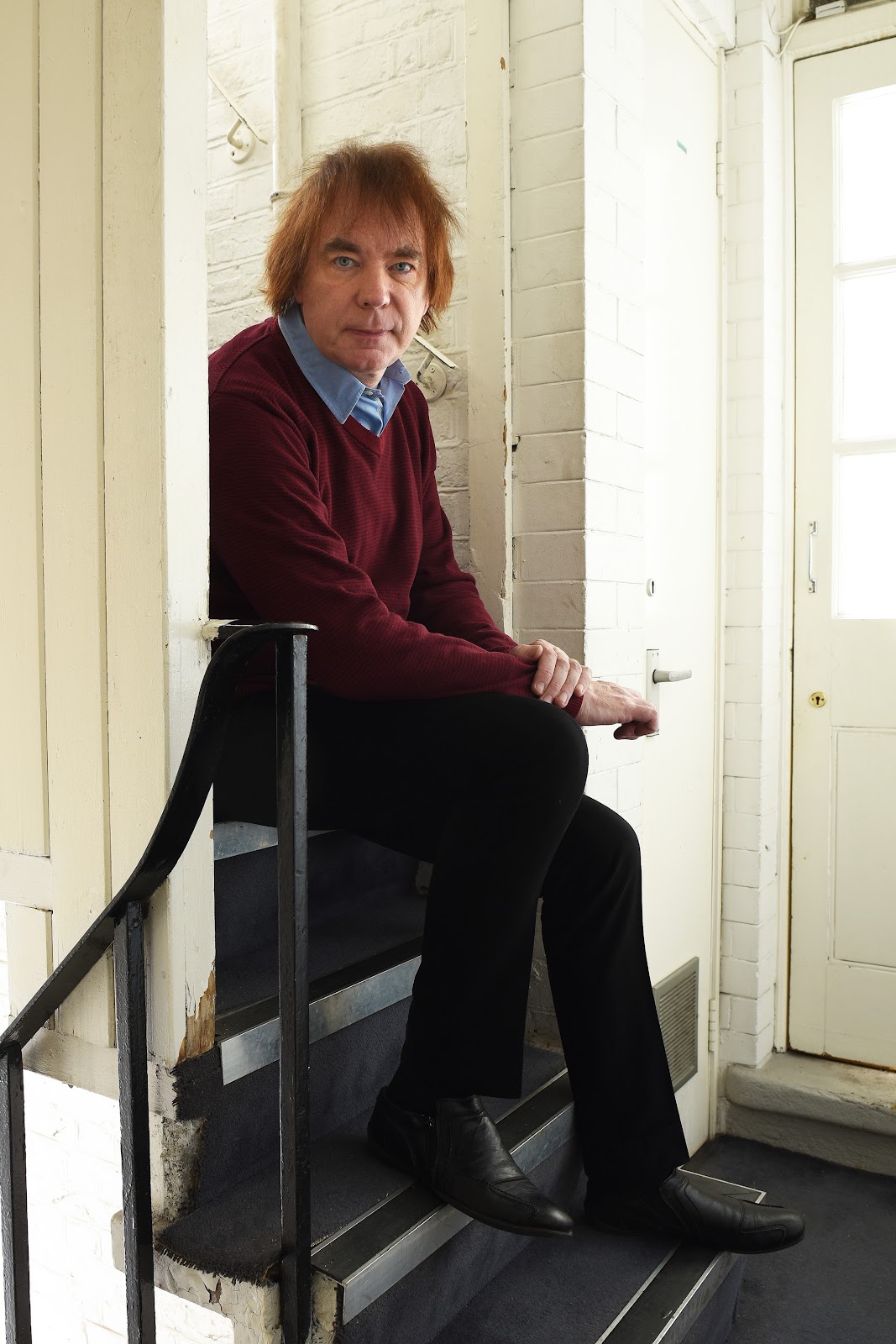
Ahead of his two concerts – in Stratford-upon-Avon and Birmingham, conducting Orchestra of the Swan with this year’s Associate Artist, cellist Laura van der Heijden – I went to meet Julian Lloyd Webber: now Principal of Birmingham Conservatoire, and steering it through some exciting times as it prepares to move into its purpose-designed new home.

Entering his office in the old building – sadly nearing the end of its productive life, in the centre of the city – one cannot fail to be reminded, though, of his previous career as one of his (and my) generation’s greatest, and most successful, solo cellists: with posters of some of his most memorable achievements scattered throughout the room. Indeed, above his desk – in pride of place, perhaps – he points out a large framed copy of the cover of the CD I am nervously clutching between my fingers: a recording which confirmed his status of hero for me, and for many others. But more of that later: because, as he welcomes me in, and shakes my hand, there could not be a more genial and gracious interviewee. (As I am rapidly learning – as my first year of being OOTS’ Writer-in-Residence comes to a close – the majority of classical musicians are incredibly generous people: open, willing to chat, to treat you as an equal, to spend time with you… – they just happen to be incredibly talented, too – although no mention of this will ever pass their lips.)

Monday, 20 March 2017

The greatest and most satisfying manifestations of human expression…

On Thursday, 13 April 2017, “internationally acclaimed clarinettist, recitalist, chamber musician, recording artist and lecturer” Emma Johnson will be joining OOTS for an evening of sublime 18th century music in the Forum Theatre, Malvern. Although in the middle of a busy concert schedule, Emma was kind enough to carry out the following interview, via email.

There don’t appear to be many famous classical clarinettists in the world (indeed, at any one point in time). Is this because of the lack of mainstream repertoire – especially, say, compared to that for the piano or violin?
The solo repertoire for violin and for piano is far larger than that of any of the woodwind instruments, and that is why the clarinet is usually considered an orchestral instrument. When you are nine years old and picking an instrument to play, you don’t know these things. But once it became clear I wanted to be a musician, it was naturally assumed I would try to play in an orchestra.
     However, I gradually discovered that the solo clarinet repertoire is richer than people realize: spanning from Mozart, Weber, Brahms and Schumann, to Finzi, Poulenc, Copland and many modernists; as well as playing a pivotal role in jazz. There is, in fact, ample material for a clarinet soloist; and I have expanded the repertoire, too: by making arrangements and transcriptions, and commissioning new pieces.
     In addition, winning BBC Young Musician at the age of 17 allowed me to think differently, and to develop my clarinet playing so that it had the variety and range of a solo recitalist. Because of the opportunities the competition opened up to play solo, it enabled me to realize a vision I had of how a solo clarinettist could be.

Tuesday, 7 March 2017

Orchestra of the Swan’s 21st Anniversary Concert – The English Genius:
Themes and variations

14 March 2017: Stratford ArtsHouse

  • Gustav Holst – St Paul’s Suite
  • Ralph Vaughan Williams – Fantasia on a Theme by Thomas Tallis
  • Ralph Vaughan Williams – Symphony no5 in D major

With the first classical symphonies (as we might recognize them today) emerging from around Lombardy in the 1730s, it seems awfully bad form that the earliest English masterpiece of the genre didn’t arrive until 1908: with Elgar’s magnificent opus 55. To make up for its tardiness, though, that work was performed one hundred times in just over a year – in cities as far apart as Manchester and Saint Petersburg.

And, of course, it wasn’t long before other composers took up the baton. So – even though many pundits repeatedly (and fatuously) declared the form dead (globally) during the 20th Century – suddenly, like buses, whole hosts of English symphonic works arrived together! Names that spring to mind as Elgar’s natural heirs include those born ‘just up the road’ in Northampton – William Alwyn, Malcolm Arnold, and Edmund Rubbra: who wrote twenty-five between them. Down the road was Humphrey Searle – born in Oxford – with five. And then, looking south, towards the village (and glorious hymn-tune) of Down Ampney, in Gloucestershire, there emerged probably the country’s greatest symphonic composer to date: Ralph Vaughan Williams, with his traditional sequence of nine.

It never ceases to amaze me just how distinctive in disposition these creations are – and yet all are instantly identifiable as the man’s own. But the Fifth – which closes this 21st Anniversary Concert – is the one which many claim to be his greatest (and I could not disagree).

Ostensibly romantic and beautiful, it should offer respite from the explicit violence of its predecessor; and yet it overflows with ambiguity: inciting doubt, rather than imparting belief. It could, in its own keep-calm-and-carry-on fashion, be seen as a stereotypically English response to the global destruction enveloping its arrival; and yet its heartfelt desolation lies barely beneath its composer’s not-quite-so-stiff upper lip – so does not take much unearthing. It is thus, I contend, the most ‘mortal’ of his symphonies. Indeed, as their creator once stated: “The principles which govern the composition of music… are not the tricks of the trade or even the mysteries of the craft, they are founded on the very nature of human beings.”

110 years after its prodigious birth, the English symphony endures. A wonderful recent example is Peter Maxwell Davies’ Symphony No.10. And we also have the English Symphony Orchestra’s extensive 21st Century Symphony Project – led by OOTS’ former guest conductor Kenneth Woods – launching in a fortnight. Long may it prevail!